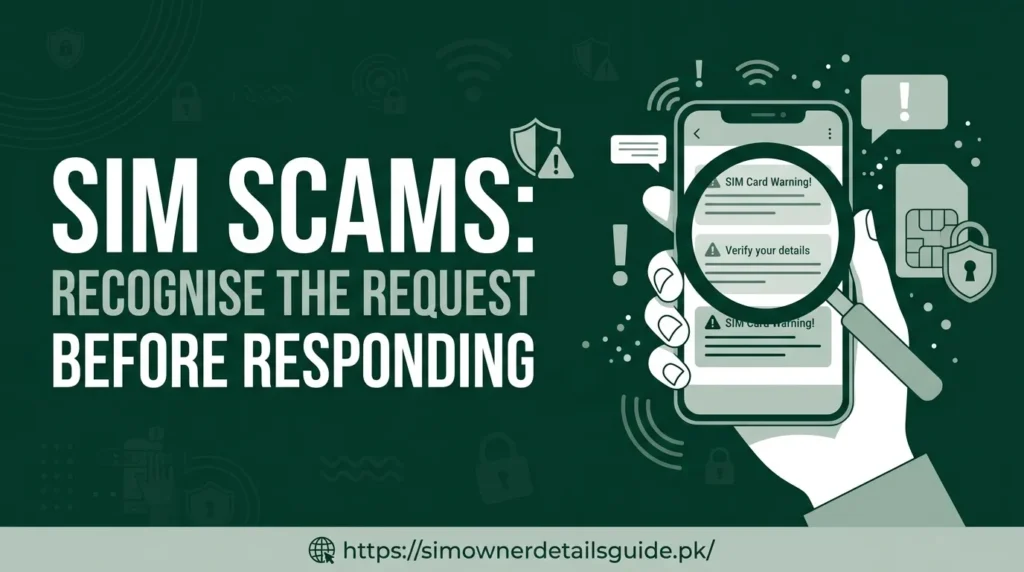
SIM scams often begin with a request for an OTP, a CNIC picture, payment or an app installation to verify your connection. Pause and contact the provider through a channel you can verify before responding.
SIM scams: recognise common pressure tactics
A caller may claim your SIM will close unless you reveal a code immediately. A lookup page may show a convincing loading animation and then ask for payment, a CNIC photo or an APK installation. The urgency and appearance are not proof of an official account process.
End the contact and reach the company through an address you obtained independently. Do not call a support number supplied only by the suspected caller. Keep the original message so you can describe exactly what was requested.
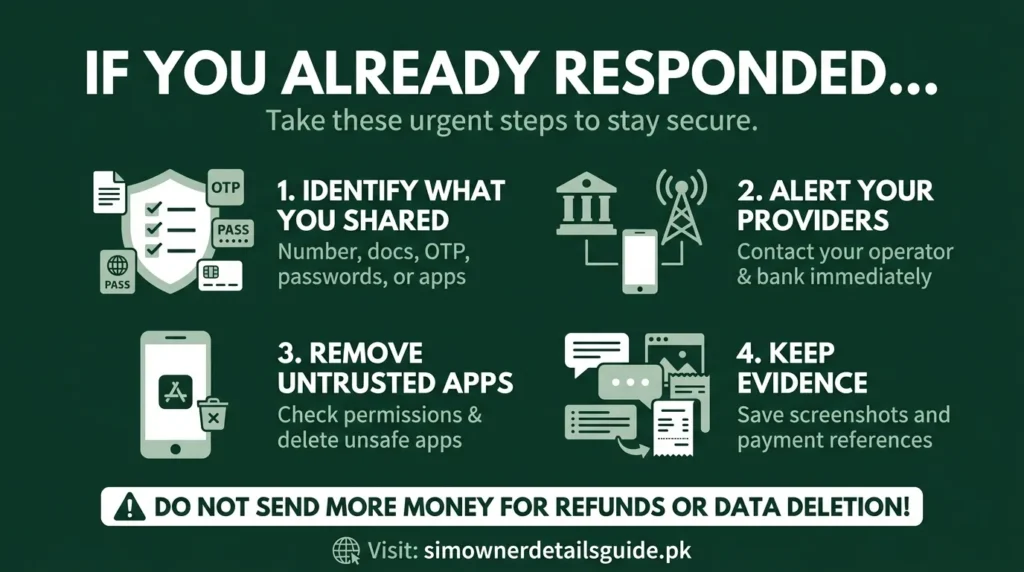
If you already responded
List what you shared: number, document image, OTP, password, payment or installed app. The response depends on that exposure. Contact the affected operator or financial provider promptly for an account-risk assessment. For an installed app, review permissions and remove it if you cannot trust its publisher.
Keep payment references and screenshots before deleting the conversation. Do not send further money for a promised refund or data deletion.
Report a specific event
Describe the date, contact number, demand and any loss. Avoid declaring a publicly shared owner name to be the culprit. Use the reporting guide to choose between an account-service complaint and a cybercrime report.